
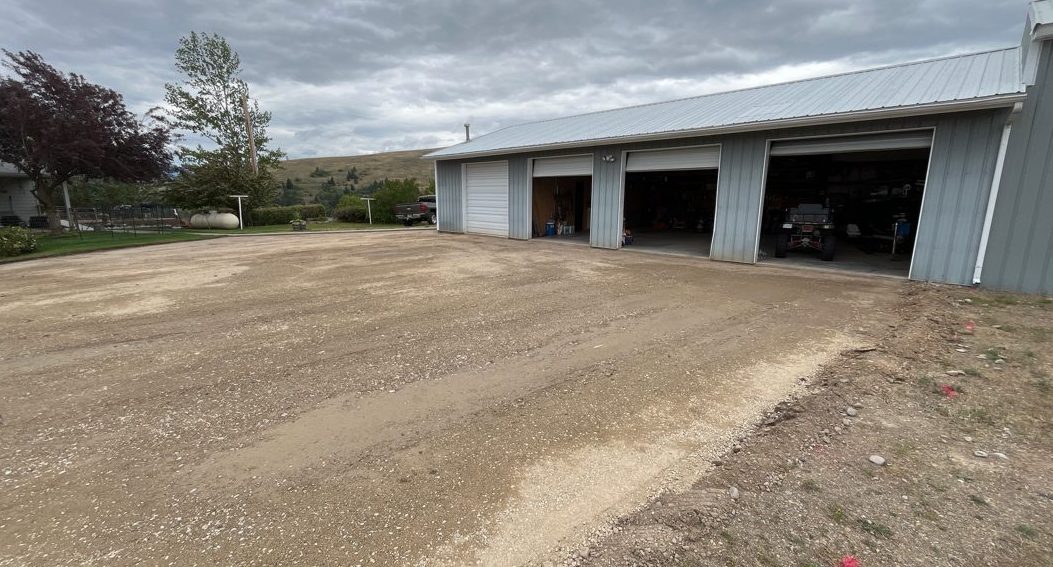
Converting a gravel driveway to asphalt is a major upgrade. It improves curb appeal, reduces dust and maintenance, and creates a smoother surface that’s easier to plow and keep clean. The key to a long-lasting asphalt driveway isn’t just the asphalt—it’s the prep work underneath.
This educational guide explains what happens before the asphalt goes down, and why grading, drainage, and base compaction matter so much.
WHY BASE PREP MATTERS
Asphalt is flexible, but it still needs a stable, well-compacted foundation. If the base is weak or holds water, the asphalt can crack, rut, or settle over time.
A properly built base helps:
- Support vehicle weight without sinking
- Prevent low spots and puddling
- Reduce freeze/thaw damage
- Extend the life of the pavement
STEP-BY-STEP: GRAVEL TO ASPHALT CONVERSION
1) Evaluate the existing driveway
We start by looking at:
- Current driveway width and layout
- Drainage patterns and low areas
- Soil conditions and soft spots
- How thick the existing gravel/base is
This determines whether the existing material can be used as part of the base or if it needs to be rebuilt.
2) Grading for drainage
Drainage is one of the biggest factors in asphalt longevity.
- We shape the driveway so water moves off the surface
- We address edges, shoulders, and tie-ins
- If needed, we correct problem areas where water currently sits
If water has nowhere to go, it will work its way into the base and cause issues later.
3) Build or improve the base
Depending on what we find, we may:
- Add base material to reach the right thickness
- Replace unstable material in soft spots
- Compact in lifts to create a firm foundation
Compaction is critical. A base that looks good but isn’t compacted properly can settle after paving.
4) Paving the asphalt
Once the base is built and graded correctly, we pave the asphalt and compact it to create a smooth, durable surface.
Homeowners often ask about thickness. The right thickness depends on how the driveway will be used (cars only vs. heavier trucks/trailers). During your estimate, we’ll recommend what makes sense for your property and usage.
COMMON MISTAKES TO AVOID
If you’re comparing bids, watch out for these red flags:
- Skipping base work and paving directly over loose gravel
- No plan for drainage or correcting low spots
- Minimal compaction
- No clear explanation of what’s included
A quality job should include a clear plan for grading, base prep, and compaction—not just “putting asphalt down.”
FAQs: GRAVEL TO ASPHALT DRIVEWAYS
Can you pave directly over existing gravel?
- You can’t get a long-lasting result by paving over loose gravel. The gravel/base needs to be properly graded and compacted first, and sometimes rebuilt depending on thickness and soil conditions.
How do you prevent puddles on a new asphalt driveway?
- Puddles are usually a grading and drainage issue. The driveway should be shaped so water moves off the surface and away from the base.
How thick should the asphalt be?
- There isn’t one universal answer. Thickness depends on how the driveway will be used (cars vs. heavier vehicles) and the condition of the base. A site visit is the best way to determine what’s appropriate.
What’s the biggest factor in driveway longevity?
- Base quality and drainage. A strong, well-compacted base with proper water management is the foundation for long-term performance.
Is asphalt a good choice for Montana winters?
- Asphalt performs well in cold climates when the base is built correctly and water is managed. Freeze/thaw cycles make drainage and compaction especially important.
READY TO UPGRDE YOUR GRAVEL DRIVEWAY?
If you’re considering asphalt for your gravel driveway in the Missoula area, Advantage Asphalt can help. We’ll evaluate your driveway, explain what prep work is needed, and provide an estimate that matches the scope of the job. Contact us today! https://www.advantageasphaltpaving.com or at 406-541-8770